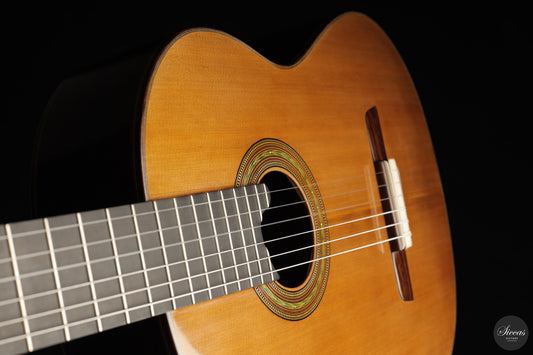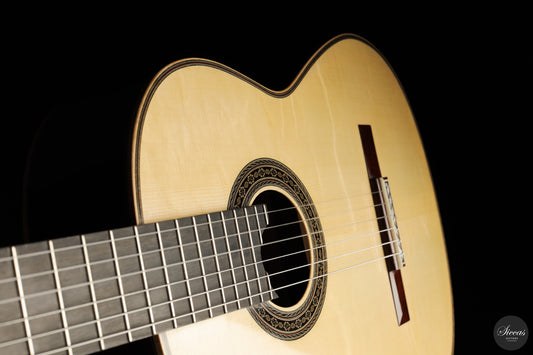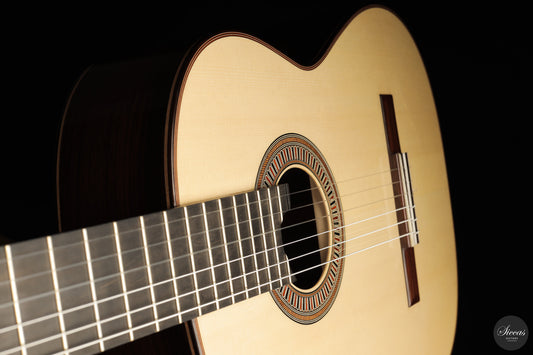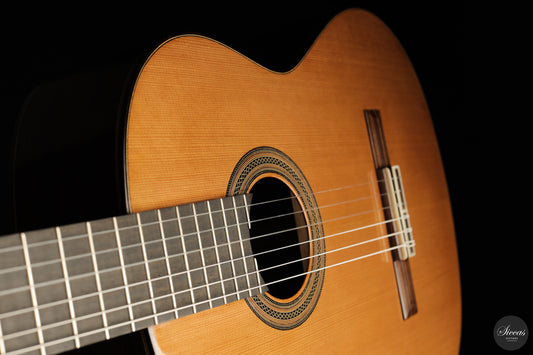

Ariel Ameijenda wurde 1963 in Montevideo, Uruguay, als Sohn des renommierten Gitarrenbauers Manuel Ameijenda geboren. Sein Vater hatte das Handwerk bei Juan Carlos Santurion erlernt, der Anfang der 1950er Jahre in Ignacio Fletas Werkstatt in Barcelona studiert hatte.
1957 eröffnete der ältere Ameijenda seine eigene Werkstatt, die er mehrere Jahre lang mit José López Cubillo teilte. Cubillo war der leitende Handwerker in der Werkstatt von José Ramírez II in Madrid gewesen. Dadurch erhielt Ariels Vater direkten Einblick in die Techniken beider großen spanischen Gitarrenbauerschulen in Madrid und Barcelona.
Außerdem erwarb er umfangreiches Wissen durch die Reparatur von Instrumenten einiger der weltweit besten Luthiers. Andrés Segovia lebte neun Jahre lang in Montevideo, und wo immer er hinging, folgten außergewöhnliche Gitarren. Instrumente von Meistern wie Hauser, Simplicio und Santos Hernández gingen regelmäßig durch die Ameijenda-Werkstatt und ermöglichten einen engen Blick auf ihre Konstruktion.
Als Kind, das in der Werkstatt seines Vaters mithalf, erlernte Ariel Techniken führender Meister klassischer Gitarren sowie von Renaissance- und Barocksaiteninstrumenten. Noch wichtiger ist, dass sich die Leidenschaft für dieses Handwerk früh und natürlich entwickelte. Im Alter von vierzehn Jahren, unter der Anleitung seines Vaters, wechselte er von Reparaturarbeiten zum Bau seiner ersten Instrumente.
Mit neunzehn Jahren begann er an der Universität Musikwissenschaft zu studieren, mit Schwerpunkt auf Akustik und Musikgeschichte. Diese Studien prägten sein Verständnis des Gitarrenbaus und historischer Instrumente erheblich.
1997 eröffnete Ariel seine eigene Werkstatt in Montevideo und baut heute Gitarren und historische Saiteninstrumente für Musiker weltweit. Sein internationaler Ruf wuchs, nachdem er seine Instrumente in den USA beim Alexandria Guitar Festival 2007 und beim New York Guitar Seminar 2008 präsentiert hatte.
Heute lehrt er auch an der Escuela Universitaria de Música und bietet einen Kurs über die Geschichte des Gitarrenbaus von der Renaissance bis zum einundzwanzigsten Jahrhundert an. 2011 lehrte er diesen Kurs an der Universidad Federal de Paraná in Argentinien und beim EMBAP Guitar Academic Symposium in Curitiba, Brasilien.
2014 verlegte Ariel seine Werkstatt an den Cerro de los Burros bei Piriápolis an Uruguays Ostküste, um der wachsenden Nachfrage nach seinen Instrumenten gerecht zu werden und sich voll dem Bau von Gitarren nach eigenem Design zu widmen.
Das Handwerk
Der Konzertgitarrenbau auf höchstem Niveau erfordert jahrelang angesammeltes Wissen. Eine fertige Konzertgitarre repräsentiert in der Regel mehrere hundert Stunden Handarbeit.