
Isabella Selder
Born in Friedberg, Bavaria, in 1990, Isabella Selder began playing guitar at the age of six under the guidance of Stefan Schmidt. Her talent soon became evident, leading to early appearances at notable festivals such as Young Talents in Nürtingen and successes in competitions including Jugend musiziert, the Anna Amalia International Guitar Competition in Weimar (2007, 2011), and the RAGO Competition in Stuttgart (2009). More recently, she received fourth prize at the XVIII International Guitar Festival in Coria (Spain) and third prize at the IX Concurso Internacional “Norba Caesarina” in Cáceres, Spain.
In 2013, she performed at the International Guitar Festival in Augsburg, sharing the stage with artists such as Zoran Dukic, the Alegrias Guitar Trio, and the Joscho Stephan Trio.
Her enthusiasm for chamber music is equally strong. With the guitar ensemble El Polifemo, directed by Johannes Stickroth, Isabella won first prize with outstanding success at the German Competition for Orchestras in Wuppertal (2008). She also received scholarships from the Stadtsparkasse Augsburg in 2004 and 2007.
From 2010 to 2015, Isabella studied with Thomas Müller-Pering at the Liszt School of Music Weimar. A scholarship from the Swiss Thyll-Foundation later allowed her to study with Laura Young at the Escola Superior de Música de Catalunya in Barcelona. In 2015, she continued her master’s studies with Prof. Young at the Mozarteum University Salzburg.
Her repertoire focuses on British and Spanish composers of the 20th century, reflecting her sensitivity to sound and structure. Isabella has participated in masterclasses with artists such as Rafael Aguirre, Pavel Steidl, Judicaël Perroy, Johannes Monno, Carlo Marchione, Olaf van Gonnissen, and Carles Trepat, deepening her artistic perspective and musical expression.
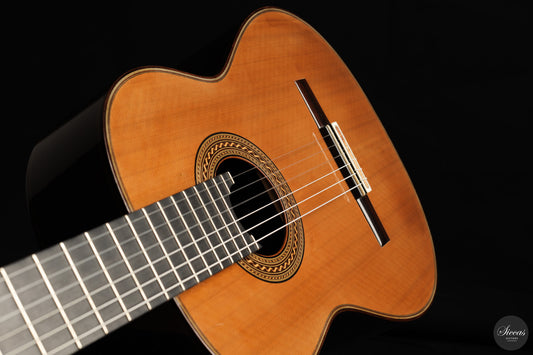
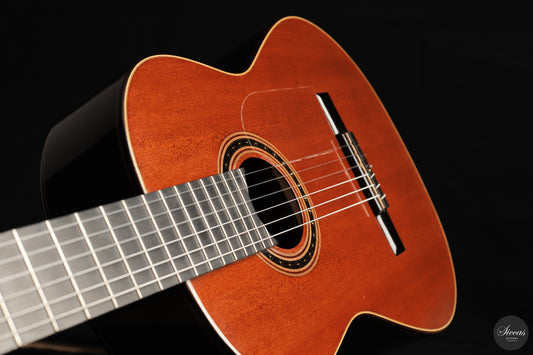
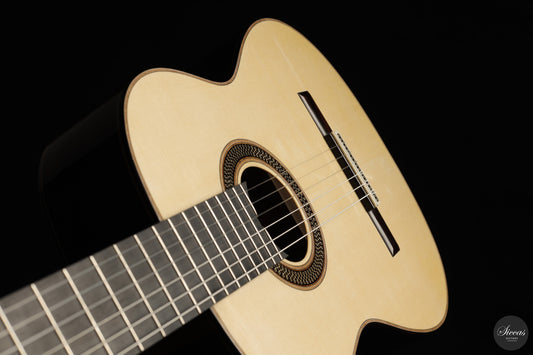
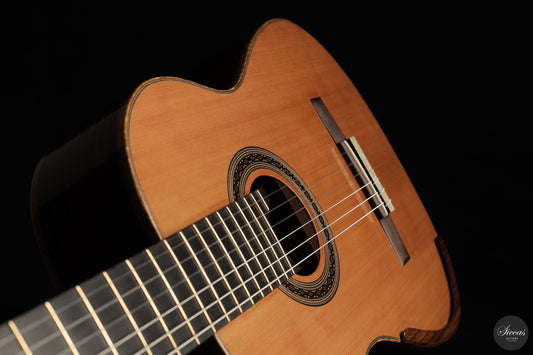
Aufgeführt bei Siccas Guitars
Jeder klassische Gitarrist, der bei Siccas Guitars auftritt, bringt einen eigenständigen musikalischen Weg zum Instrument mit — geprägt von Jahren des Studiums, Wettbewerbserfahrungen und der jeweiligen musikalischen Tradition. Die klassische Gitarre verlangt anhaltende technische Hingabe und ein tiefes Engagement mit einem Repertoire, das von der Renaissance bis zu Werken für lebende Interpreten reicht.