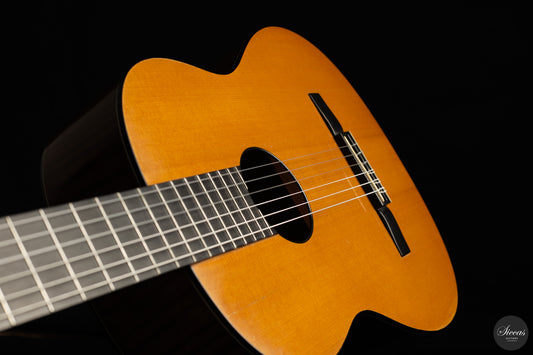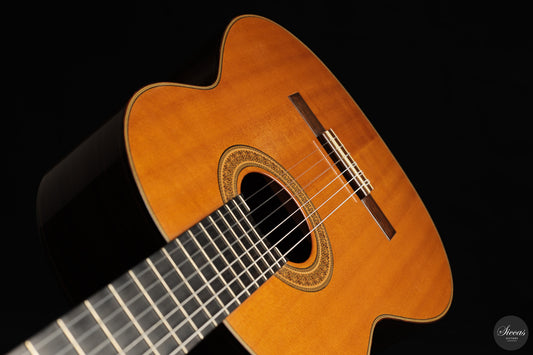



Vicente Carrillo - 2025 Flamenca Blanca - Cipres Exotico
Vicente Carrillo - 2025 Flamenca Blanca - Cipres Exotico
Details
Details
Overview
Overview


Video overview


More details about the guitar
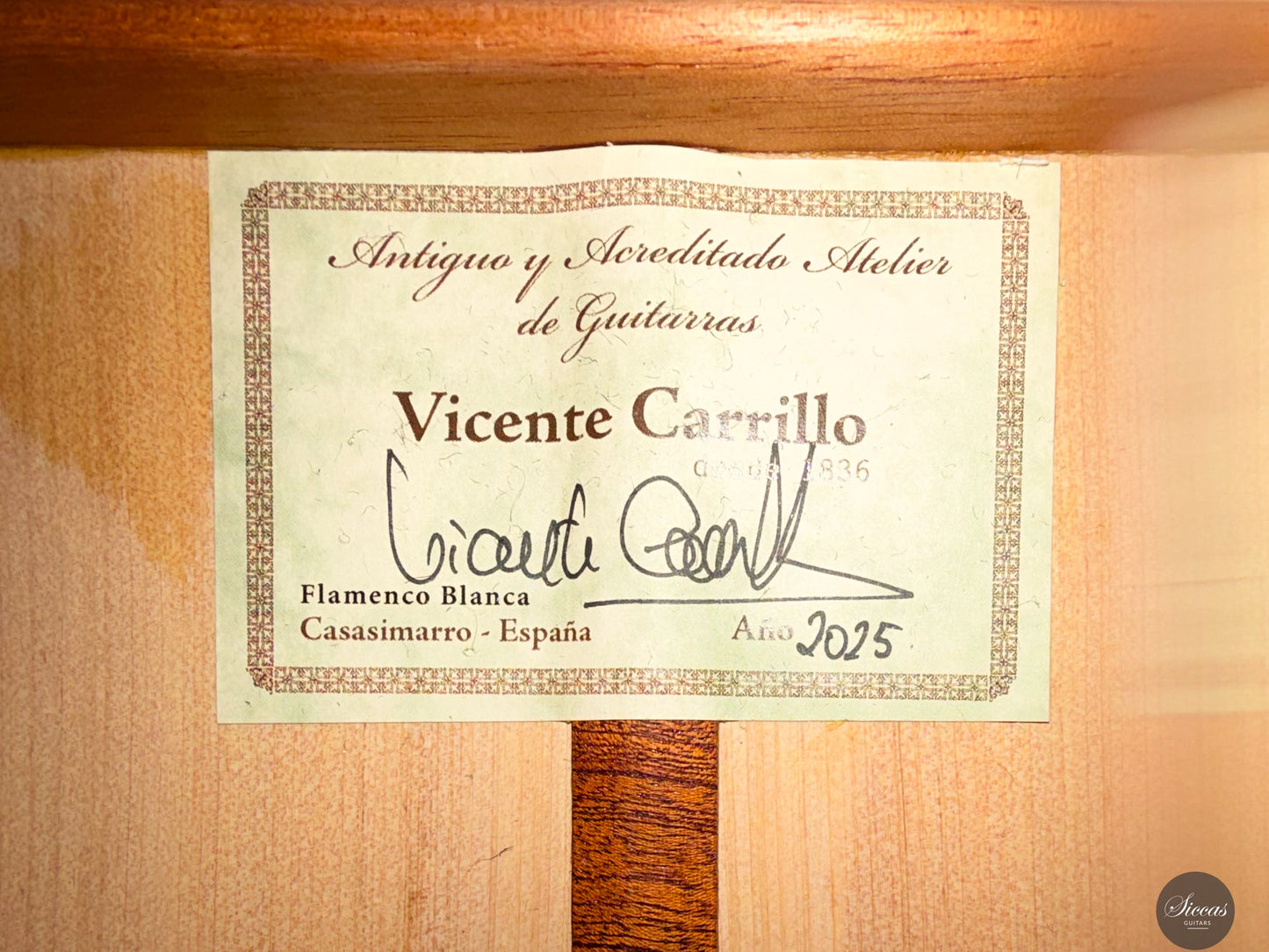
About the luthier
The Carrillo family began building guitars in 1744 in Casasimarro, a village in the region of Manchuela Conquense historically known as “El pueblo de las guitarras” – the town of guitars. Vicente Carrillo represents the seventh generation of this lineage. Still based in the original workshop, he has received both the Regional Craftsmanship Award (2009) and the Spanish National Award (2010) for his contribution to the art of lutherie. His guitars are known for their balance between clear, well-defined basses and sweet, lyrical trebles. Innovation plays a central role in his approach, with an openness to new methods and materials that support tonal refinement. Vicente Carrillo’s instruments have been played by a wide range of artists, including Paco de Lucía, Tomatito, J.M. Cañizares, El Niño Josele, Rafael Cañizares, Javier Limón, Keith Richards, and Josemi Carmona.
About the guitar
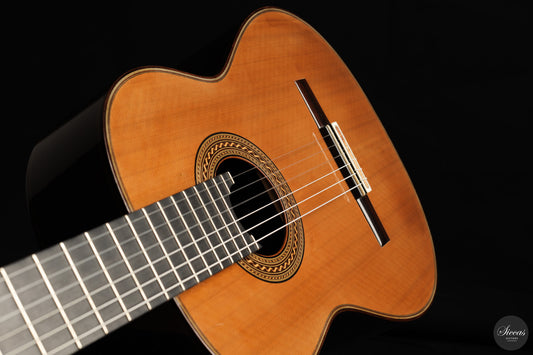
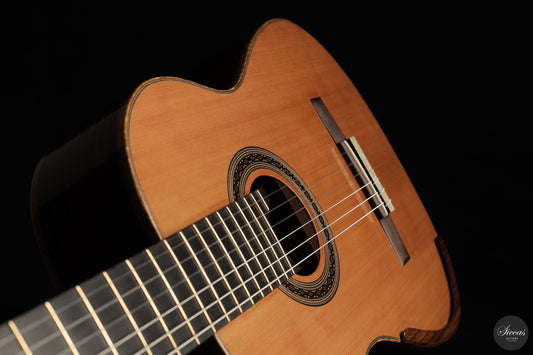
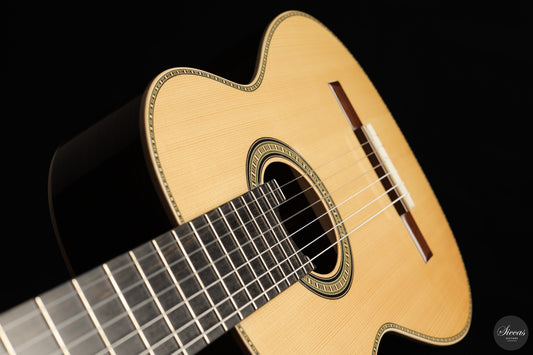
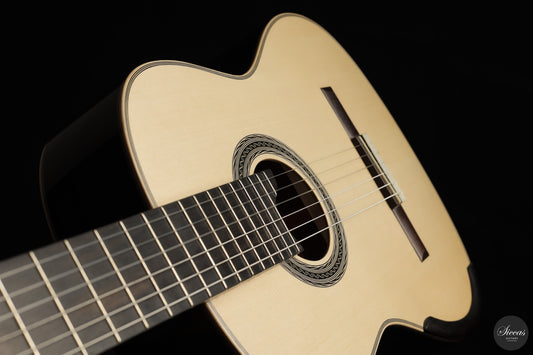
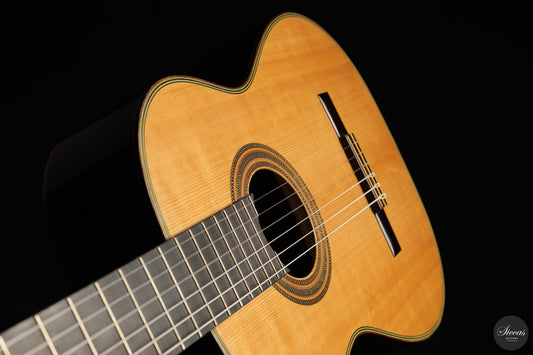
This 2025 Flamenca Blanca model by Vicente Carrillo blends the sonic character of flamenco tradition with a structural concept rarely found in this category: lattice bracing. Paired with a spruce top and highly figured Spanish cypress back and sides, the lattice structure enhances sustain and tonal complexity while preserving the fast response and dryness essential to flamenco playing. The result is an unusually colourful voice for a blanca guitar, with clear, crisp attack, but greater overtone presence and a broader dynamic palette. The trebles are luminous and direct, while the basses remain tight and responsive, supporting nuanced rhythmic articulation. Visually, the instrument is distinguished by the exotic cut of the cypress, offering a striking aesthetic that complements its modern acoustic approach. This is a flamenco guitar conceived for versatility, equally suited to contemporary concert work and traditional flamenco settings.

While this one is sold, these are ready for you
-
Classical Guitars
The classical guitar, with its soft nylon strings and characteristic timbre, has become a symbol of chamber music, Spanish tradition, and concert repertoire. Its modern form was shaped by Antonio de Torres in the 19th century, setting the standard for the body, fan bracing, and the 65-centimeter scale length that are still used today. Instruments in this category open up a rich palette from the refined Romantic miniatures of Tárrega to the majestic concertos of Rodrigo. Here you will find guitars that preserve historical continuity and at the same time inspire new interpretations.Look all products of the collection -
Antonius Müller - 2013 VI Doubletop
Price on requestLuthier: Antonius MüllerConstruction Type: Double-Top Guitars -
Luthier: Jakob LebischConstruction Type: Double-Top Guitars
-
Daniele Marrabello - 2026 No. 193
Price: 8.990 €Unit price per Tax free (0% DE)Luthier: Daniele MarrabelloConstruction Type: Traditional -
Nils Schebesta - 2026 Doubletop
Price: 7.990 €Unit price per Tax free (0% DE)Luthier: Nils SchebestaConstruction Type: Double-Top Guitars -
Patrick Mailloux - 2026 Palomée Doubletop 64 cm
Price: 6.990 €Unit price per Tax free (0% DE)Construction Type: Double-Top Guitars -
Adrien Savary-Freestone - 2020 Arias
Price: 4.490 €Unit price per Tax free (0% DE)Luthier: Adrien Savary-FreestoneConstruction Type: Traditional -
Jose Marques - 2026 Lattice
Price: 5.490 €Unit price per Tax free (0% DE)Luthier: Jose MarquesConstruction Type: Lattice -
Hermann Hauser II - 1976 1014/a
Price on requestLuthier: Hermann Hauser IILuthier: Rare GuitarsConstruction Type: Traditional -
Richard Jacob Weissgerber - 1940 34. 1./7.
Price: 5.990 €Unit price per Tax free (0% DE)Luthier: Richard Jacob WeissgerberConstruction Type: Traditional -
Walter Vogt - ca. 1970
Price: 3.990 €Unit price per Tax free (0% DE)Construction Type: Traditional