

Dennis Tolz
-
Luthier: Dennis Tolz
-
Luthier: Dennis TolzLuthier: Rare Guitars
-
Luthier: Dennis TolzLuthier: Seltene Gitarren
-
Luthier: Dennis Tolz
-
Luthier: Dennis Tolz
-
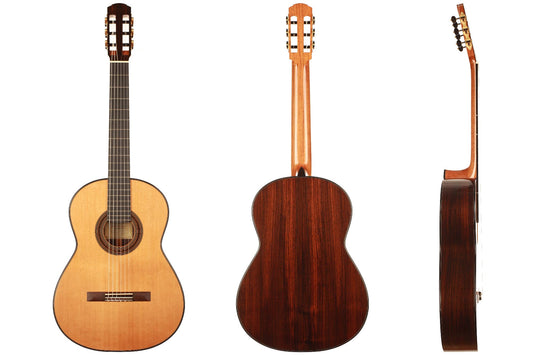
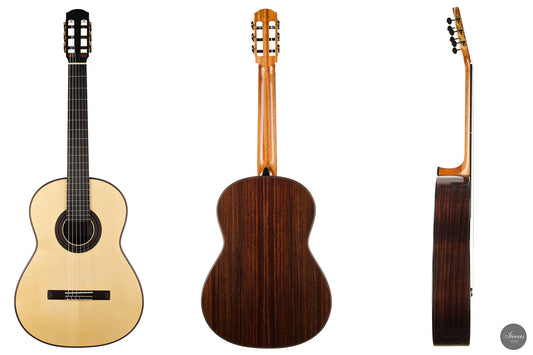
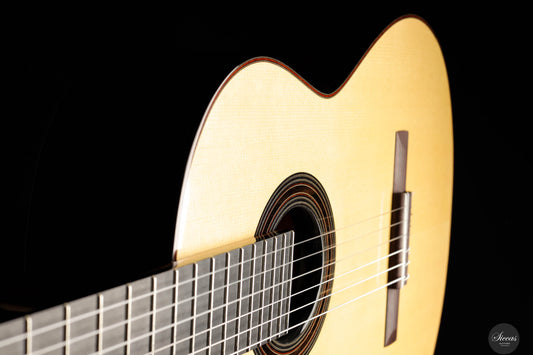
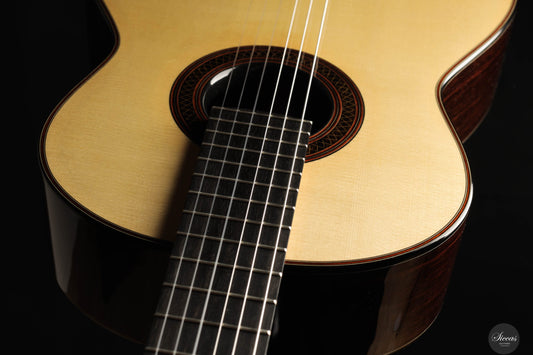
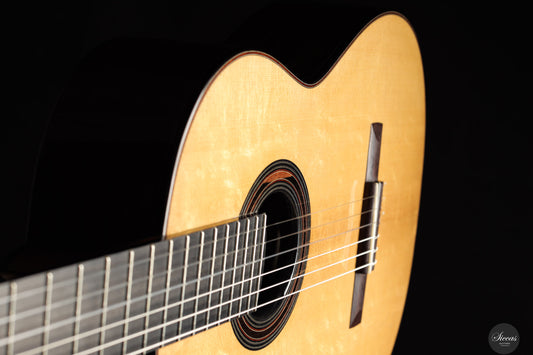
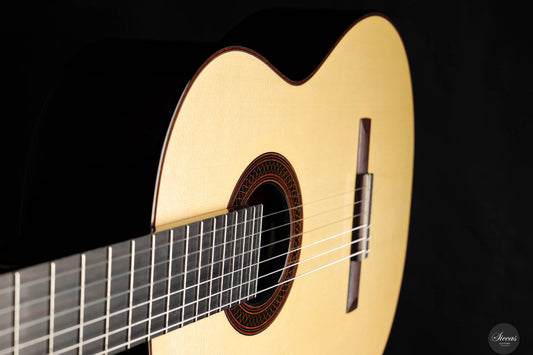
Dennis Tolz - 2024 Doubletop
Price on requestLuthier: Dennis TolzConstruction Type: Double-Top Guitars






You may also be interested Dennis Tolz
Dennis Tolz – Guitar Maker
Dennis Tolz was born in Berlin in 1985. He began playing the guitar at the age of fifteen, and upon discovering the art of guitar making, he knew it was his true calling.
After finishing his A levels, he moved to the United Kingdom to study at the Newark School of Instrument Making. As the best student of his year, he received the Ashley Mark Publishing Prize from the UK’s Classical Guitar Magazine.
In 2008, Dennis returned to Germany to continue his studies at the University of Applied Sciences in Markneukirchen, where he graduated as a Master Luthier. One of his greatest influences was Gernot Wagner, who shared his deep knowledge of double-top guitars. Since 2012, Dennis has been developing his own distinctive double-top model.
His guitars are played by world-renowned musicians, including Giampaolo Bandini, Eva Beneke, John Dearman, Graham Devine, René Izquierdo, Ignacio Rodes, David Russell, and Andrew Zohn. Dennis currently lives and works in Kiel, Germany.
Philosophy and Craftsmanship
Dennis aims to build responsive, colorful, articulate, and powerful instruments that are easy to play. To achieve this, he combines traditional building techniques such as fan bracing and the Spanish heel with modern materials like composite double-tops. The result is a guitar that offers concert-level projection and warmth, blending traditional timbre with modern performance demands.
Each guitar is entirely handmade from the finest tonewoods, including cedar, spruce, rosewood, ebony, and mahogany.
Acoustic Research and Precision
From early in his career, Dennis Tolz has sought to understand the physics of sound. In addition to tapping, flexing, and listening to each piece of wood, he incorporates acoustic measurement techniques into his daily workshop routine, analyzing tonal properties and frequency responses at various building stages.
This allows him to target specific masses and frequencies rather than fixed dimensions, ensuring consistent tonal quality across his instruments. Using tools such as modal analysis and frequency response functions, he refines even the smallest structural details to continuously improve the sound and performance of his guitars.