
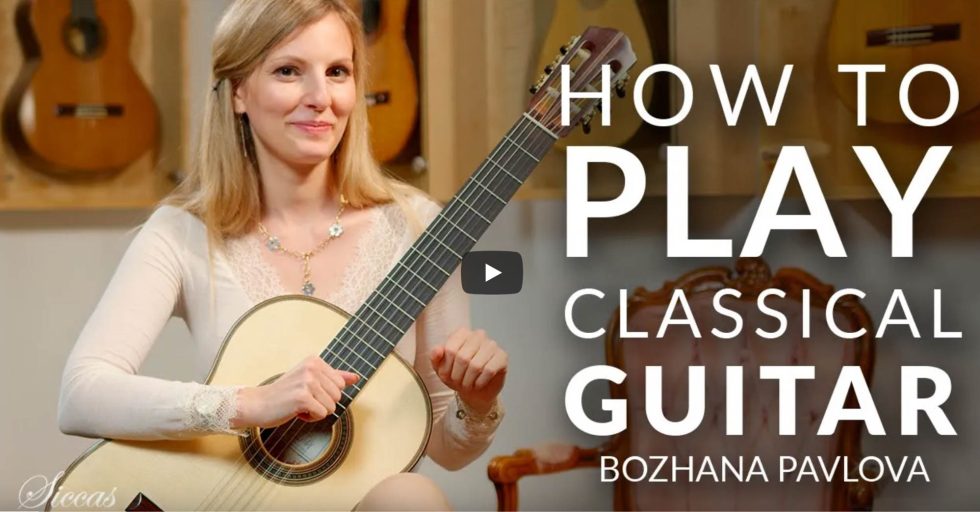
How Finger Relaxation Enhances Classical Guitar Technique: A Tutorial with Bozhana Pavlova
At Siccas Guitars, we strive to provide our audience with expert insights into improving their classical guitar playing. In our latest tutorial, classical guitarist Bozhana Pavlova discusses one of the key aspects of developing superior guitar technique: finger relaxation. This often-overlooked technique can transform your playing, making it more fluid, precise, and less prone to injury.
Why Finger Relaxation Matters for Classical Guitarists
Tension in the fingers, hand, and forearm is a common issue many guitarists face, especially during complex or fast passages. Over time, this tension can lead to strain and even injury, significantly affecting a guitarist's ability to perform. In Bozhana Pavlova's video, she demonstrates how proper finger relaxation can enhance both the efficiency and dexterity of finger movements.
Relaxed fingers are able to move more freely and with greater control, resulting in a smoother performance. By minimizing unnecessary tension, guitarists can:
- Increase their speed and accuracy: Tension often slows down movement and hinders precision, while relaxation promotes smoother transitions between notes.
- Reduce fatigue: Playing in a relaxed state helps guitarists play for longer periods without experiencing muscle fatigue or discomfort.
- Prevent injuries: Chronic tension can lead to conditions such as tendonitis or carpal tunnel syndrome. By focusing on finger relaxation, players can reduce the risk of these injuries.
Techniques for Finger Relaxation
In the video, Pavlova walks viewers through practical exercises to achieve finger relaxation. These exercises are aimed at helping guitarists gradually eliminate unnecessary tension and replace it with ease and comfort in their playing.
- Awareness of Tension: Pavlova emphasizes that the first step in improving finger relaxation is becoming aware of when and where tension builds up. Whether it's during fast scale runs or complex chord changes, identifying these moments helps address the problem early.
- Controlled Movements: She demonstrates exercises that encourage controlled and intentional movements of the fingers, focusing on fluid transitions between each note. Slowing down the movements and practicing with awareness is key to mastering this.
- Hand and Wrist Position: Finger relaxation is closely tied to the correct positioning of the hand and wrist. Pavlova showcases the optimal positioning that supports natural finger movement and reduces strain.
- Finger Stretching and Warm-Up Exercises: As part of the practice routine, Bozhana suggests incorporating finger stretches and warm-up exercises before playing. This not only promotes flexibility but also trains the muscles to remain relaxed during longer performances.
Real-Life Applications
The beauty of finger relaxation is that it enhances all aspects of classical guitar performance. Whether you're playing Baroque, Romantic, or contemporary classical pieces, finger relaxation enables you to:
- Execute intricate fingerpicking patterns with greater precision.
- Maintain consistency in tone production across all dynamics.
- Achieve a balanced sound without exerting excess pressure on the strings.
Watch the Full Tutorial with Bozhana Pavlova
If you're looking to take your classical guitar technique to the next level, we highly recommend watching the full tutorial with Bozhana Pavlova. In this video, she breaks down each aspect of finger relaxation and provides actionable exercises that guitarists of all levels can integrate into their practice routines. With her guidance, you'll discover how to play more efficiently, reduce tension, and improve your overall performance.