




Stephen Eden - 2026 "Daniel Friederich 1980" No. 228
Stephen Eden - 2026 "Daniel Friederich 1980" No. 228
Details
Details
Overview
Overview


Video overview


More details about the guitar
About the luthier
Stephen Eden is a British luthier based in Bexhill on Sea, UK. His path into guitar making began in 2004 with evening classes under Stephen Hill, an experience that led to a traditional two year apprenticeship with Pablo Requena. He established his own workshop in 2008 and has since continuously refined his tonal concepts and construction methods.
Eden’s work reflects close study of historical masters including Antonio de Torres, Santos Hernández, Hermann Hauser, and Daniel Friederich. Through his collaboration with Miles Roberts of Kent Guitar Classics, he gained direct access to important original instruments by Friederich and Hauser, deepening his understanding of structural design and tonal control. His guitars are played internationally and are recognised for their clarity, balance, and carefully considered craftsmanship.
About the guitar
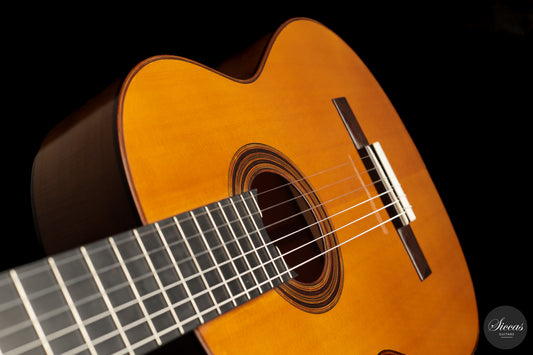
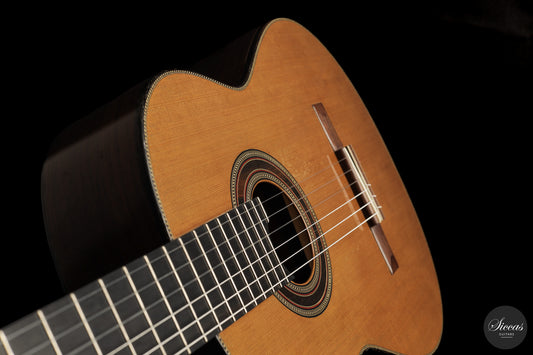
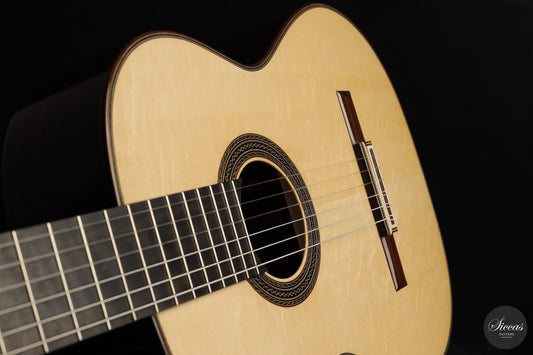
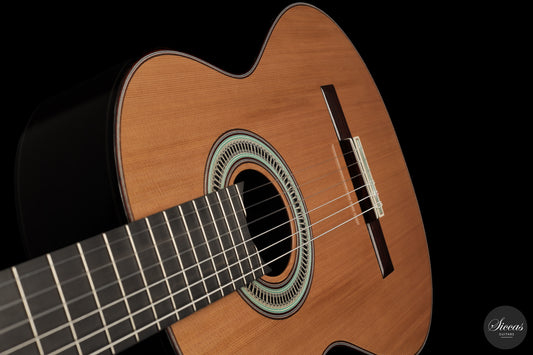
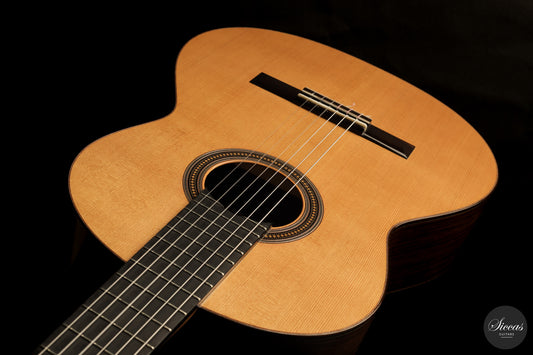
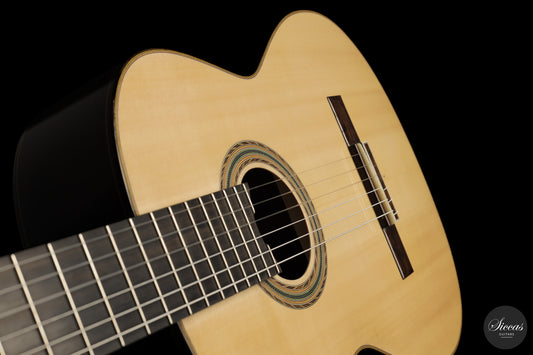
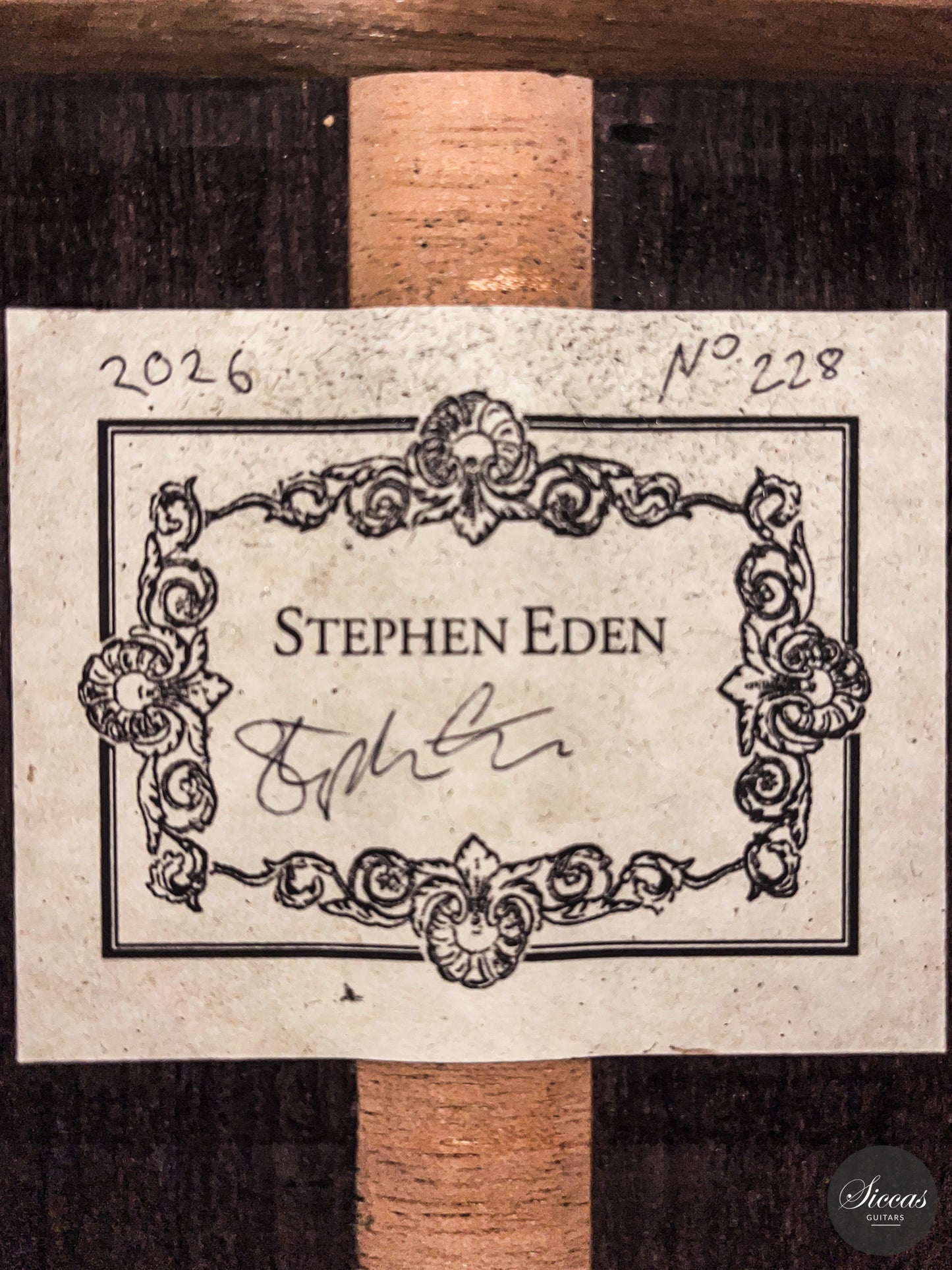
This 2026 instrument, No. 228, is Stephen Eden’s interpretation of a Daniel Friederich 1980 model. Built in traditional construction with a cedar top and Indian rosewood back and sides, and finished entirely in French polish, it follows the structural principles associated with the Paris school while remaining a personal reworking rather than a direct copy.
A defining structural element is the use of doubled sides, formed from two full thickness layers, creating a particularly rigid body. This rigidity supports projection, sustain, and tonal focus. The top is conceived for clarity and controlled power, resulting in a voice that is even, centred, and fundamentally strong. The air resonance at G sharp contributes to a compact and clearly organised tonal structure.
The sound is characterised by long sustain, an even response across the registers, and a refined presence of overtones that never obscures the fundamental. The trebles sing with depth and composure, while the basses remain controlled and supportive. The instrument offers substantial dynamic range and remains stable under increased attack, retaining clarity at higher volume. The slightly shorter scale length contributes to a comfortable playing feel, while the overall construction ensures structural solidity and tonal consistency suitable for demanding concert use.

While this one is sold, these are ready for you
-
Classical Guitars
The classical guitar, with its soft nylon strings and characteristic timbre, has become a symbol of chamber music, Spanish tradition, and concert repertoire. Its modern form was shaped by Antonio de Torres in the 19th century, setting the standard for the body, fan bracing, and the 65-centimeter scale length that are still used today. Instruments in this category open up a rich palette from the refined Romantic miniatures of Tárrega to the majestic concertos of Rodrigo. Here you will find guitars that preserve historical continuity and at the same time inspire new interpretations.Look all products of the collection -
Andreas Kirschner - 2016 Solidtop
Price: 8.394,96 €Sale price 8.394,96 € Price:Unit price per Tax free (0% DE)0 €Save: -8.394,96 €Luthier: Andreas KirschnerConstruction Type: Traditional -
Davide Scacchi - 2026
Price: 5.990 €Sale price 5.990 € Price:Unit price per Tax free (0% DE)0 €Save: -5.990 €Luthier: Davide ScacchiConstruction Type: Traditional -
Ramin Fallah - 2026 No. 484
Price: 5.490 €Sale price 5.490 € Price:Unit price per Tax free (0% DE)0 €Save: -5.490 €Luthier: Ramin FallahConstruction Type: Traditional -
Heikki Rousu - 2026 10-string No. 494
Price: 4.990 €Sale price 4.990 € Price:Unit price per Tax free (0% DE)0 €Save: -4.990 €Luthier: Heikki RousuConstruction Type: Traditional -
Jost Von Huene - 2014 Doubletop
Price: 4.990 €Sale price 4.990 € Price:Unit price per Tax free (0% DE)0 €Save: -4.990 €Construction Type: Double-Top Guitars -
Dennis Tolz - 2015 Doubletop
Price on requestLuthier: Dennis TolzConstruction Type: Double-Top Guitars -
Jean Marquet - 2026 No. 40 Modèle Contemporain
Price: 9.990 €Sale price 9.990 € Price:Unit price per Tax free (0% DE)0 €Save: -9.990 €Luthier: Jean MarquetConstruction Type: Traditional -
Marco Maguolo - 2026 Ducale Lattice No. 319 64 cm
Price: 9.990 €Sale price 9.990 € Price:Unit price per Tax free (0% DE)0 €Save: -9.990 €ReservedLuthier: Marco MaguoloConstruction Type: Lattice -
Francois R. Leonard - 2024 No. 95 Lattice 64 cm
Price: 7.990 €Sale price 7.990 € Price:Unit price per Tax free (0% DE)0 €Save: -7.990 €Luthier: Francois R. LeonardConstruction Type: Lattice -
Adrian Neher - 2026 No. 20
Price: 5.490 €Sale price 5.490 € Price:Unit price per Tax free (0% DE)0 €Save: -5.490 €Construction Type: Traditional