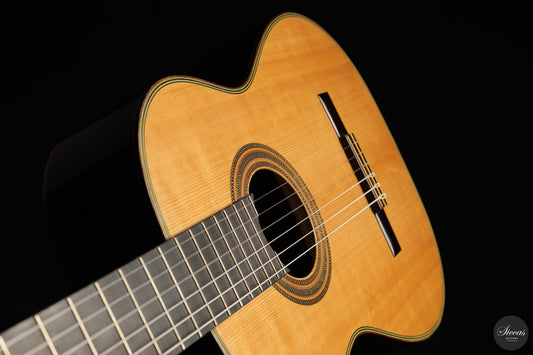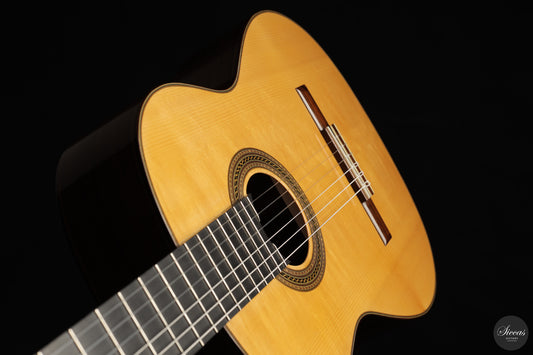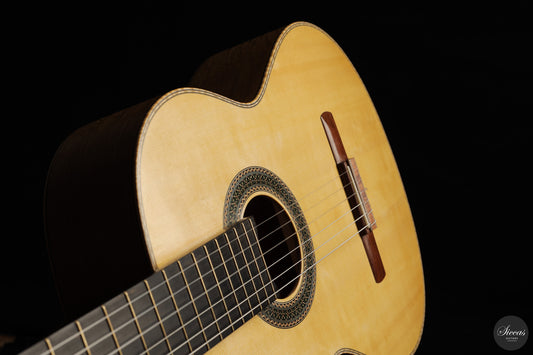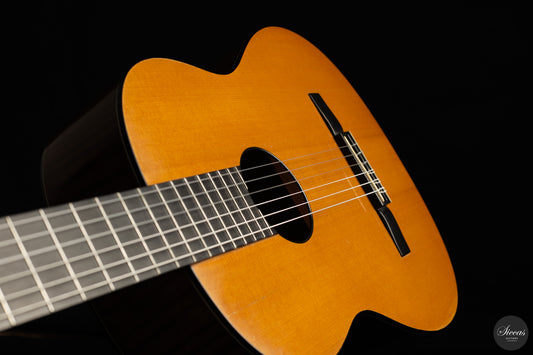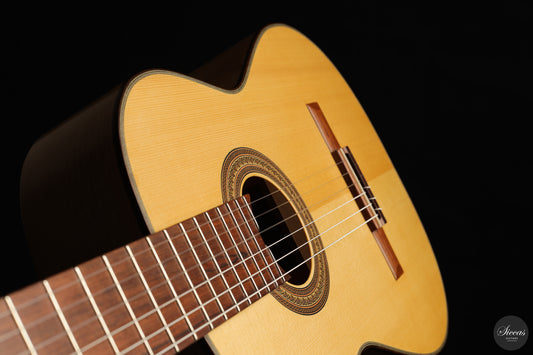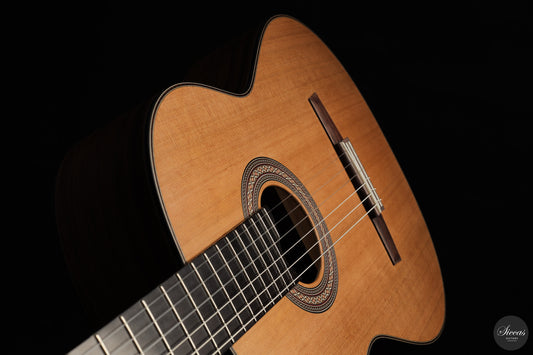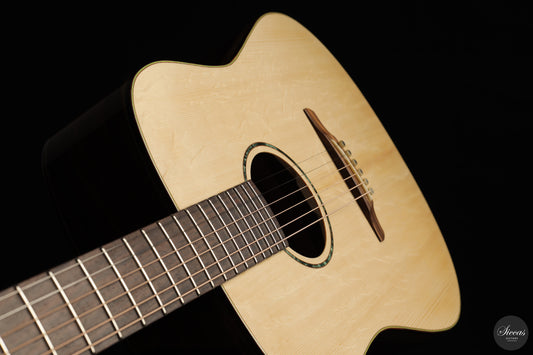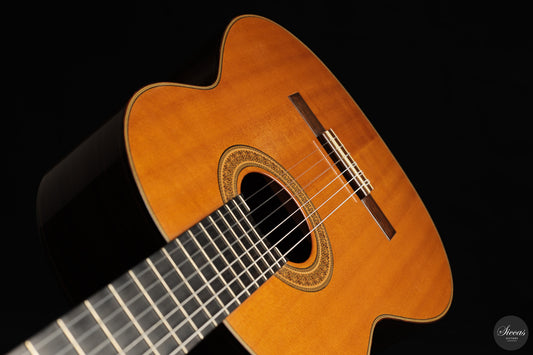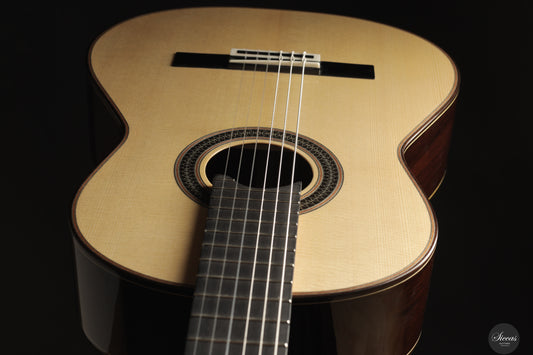





Martin Bretscher - 2025 Small Soul Lattice 63 cm
Martin Bretscher - 2025 Small Soul Lattice 63 cm
Details
Details
Overview
Overview


Video overview


More details about the guitar
About the luthier
Martin Bretscher is a German guitar maker whose work is characterised by precision craftsmanship, material awareness and a clear ethical approach. His professional background began with an apprenticeship as a cabinet maker, where he developed a refined sensitivity for wood and structural detail. In 2003 he commenced formal training as a plucked instrument maker under Armin Hanika and soon distinguished himself through the consistency and clarity of his work. In 2007 he was awarded both his master certificate and the Master Craftsman Prize of the Bavarian State Government.
In 2020 Bretscher founded Soul Guitars in Bavaria. His workshop reflects values of sustainability, responsible material sourcing and individual expression. Each instrument is conceived as a coherent musical system, in which construction, ergonomics and sound are closely interrelated. His guitars are designed to offer comfort, reliability and a clearly shaped tonal identity rather than sheer spectacle.
About the guitar
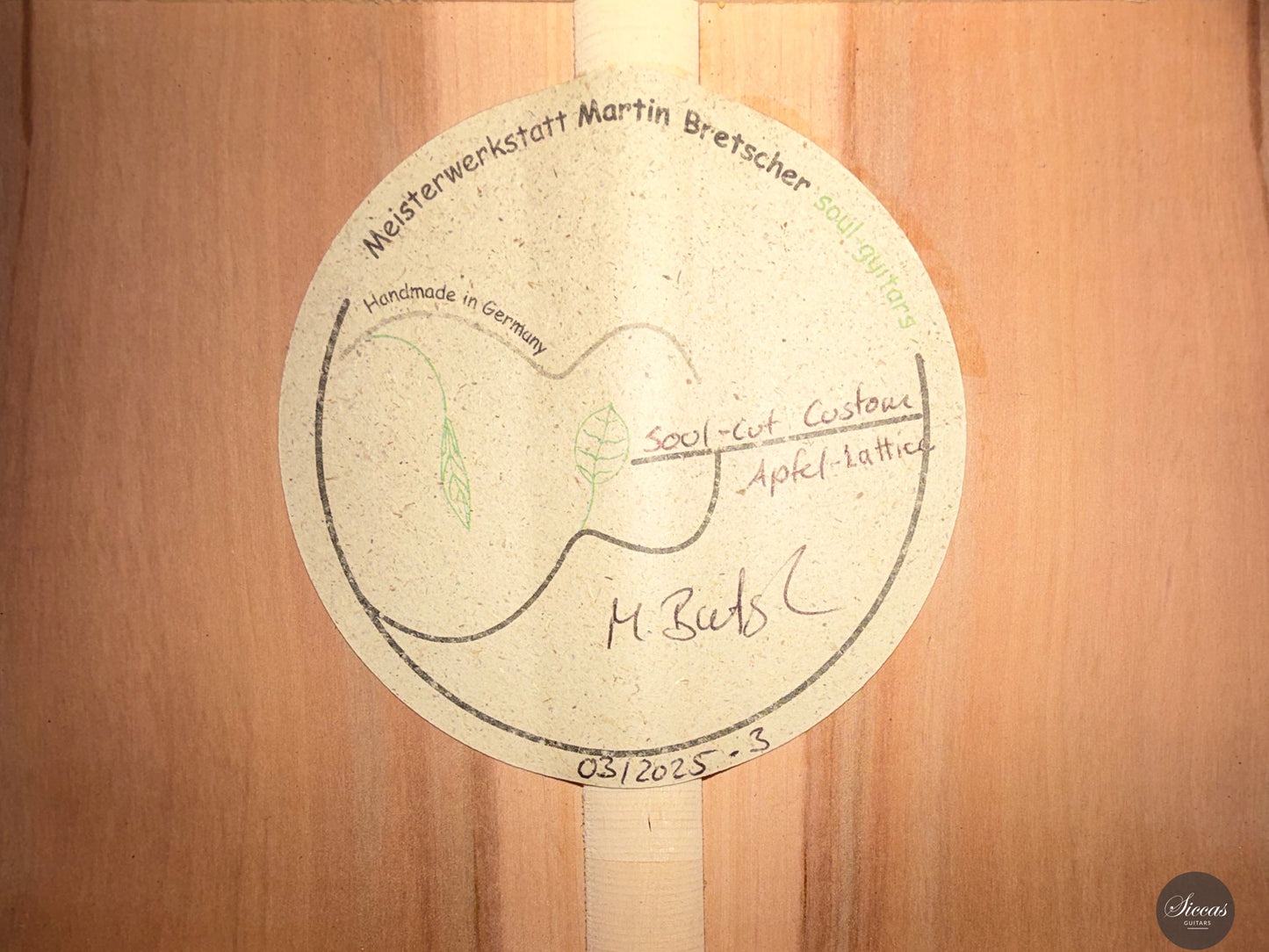
The Small Soul Lattice from 2025 is a compact concert guitar with a 630 millimetre scale length, conceived to offer increased playing comfort without compromising acoustic performance. The spruce top is supported by a lattice bracing system and paired with apple wood back and sides. The soundboard is finished with wax, while the body receives a French polish, resulting in a lightweight and responsive construction.
Despite its shorter scale, the guitar delivers a surprisingly powerful and well projected sound. The response is immediate and effortless, with tones emerging freely and evenly across the entire register. The character is round, warm and well centred, supported by a clear and stable sustain. The balance remains consistent, allowing both single line playing and chordal textures to unfold with clarity. The reduced scale contributes to a relaxed left hand feel, making the instrument particularly appealing for players seeking comfort while retaining a full and confident concert voice.

While this one is sold, these are ready for you
-
Classical Guitars
The classical guitar, with its soft nylon strings and characteristic timbre, has become a symbol of chamber music, Spanish tradition, and concert repertoire. Its modern form was shaped by Antonio de Torres in the 19th century, setting the standard for the body, fan bracing, and the 65-centimeter scale length that are still used today. Instruments in this category open up a rich palette from the refined Romantic miniatures of Tárrega to the majestic concertos of Rodrigo. Here you will find guitars that preserve historical continuity and at the same time inspire new interpretations.Look all products of the collection -
Hermann Hauser II - 1976 1014/a
Price on requestLuthier: Hermann Hauser IILuthier: Rare GuitarsConstruction Type: Traditional -
Paolo Coriani - 2025 No. 274
Price: 12.490 €Sale price 12.490 € Price:Unit price per Tax free (0% DE)0 €Save: -12.490 €Luthier: Paolo CorianiConstruction Type: Traditional -
Stephan Connor - 2024 Lattice 64 cm
Price on requestLuthier: Stephan ConnorConstruction Type: Lattice -
Richard Jacob Weissgerber - 1940 34. 1./7.
Price: 5.990 €Sale price 5.990 € Price:Unit price per Tax free (0% DE)0 €Save: -5.990 €Luthier: Richard Jacob WeissgerberConstruction Type: Traditional -
Otto Rauch - 2018 Estudio Model
Price: 2.990 €Sale price 2.990 € Price:Unit price per Tax free (0% DE)0 €Save: -2.990 €Luthier: Otto RauchConstruction Type: Traditional -
Armin Hanika - 2026 Natural Doubletop Custom 64 cm
Price: 4.990 €Sale price 4.990 € Price:Unit price per Tax free (0% DE)5.315 €Save: 325 €Manufacturer: Armin HanikaConstruction Type: Double-Top Guitars -
Emanuele Faggion - 2026 Dreadnought Model
Price: 5.990 €Sale price 5.990 € Price:Unit price per Tax free (0% DE)0 €Save: -5.990 €Luthier: Steelstring guitarsConstruction Type: Traditional -
Walter Vogt - ca. 1970
Price: 3.990 €Sale price 3.990 € Price:Unit price per Tax free (0% DE)0 €Save: -3.990 €Construction Type: Traditional -
Giovanni Tacchi - 2023 - La Decima No. 29
Price: 14.990 €Sale price 14.990 € Price:Unit price per Tax free (0% DE)14.990 €Save: 0 €Luthier: Giovanni TacchiConstruction Type: Traditional -
Siccas Luthiers - Creation Doubletop Spruce 63 cm
Price: 2.690 €Sale price 2.690 € Price:Unit price per Tax free (0% DE)0 €Save: -2.690 €Manufacturer: Siccas LuthiersConstruction Type: Double TopConstruction Type: Double-Top GuitarsConstruction Type: Short Scale